Panels cut to your ceiling height, pleated to the fullness you choose, lined for the light you actually want, and hung by the people who measured the window. Blackout lining where a room has to go dark. Free in-home estimate anywhere in the Treasure Valley.
Height. A store-bought panel is cut to a standard length, so the rod ends up just above the window frame and the room reads short. We mount the rod close to the ceiling instead, usually around ten inches above the opening or just under the ceiling line, and cut the panel to reach the floor from there. The window reads taller, the ceiling reads higher, and it costs nothing extra to do it that way.
Fullness. A ready-made panel is a flat rectangle of fabric roughly as wide as the window. Real drapery is made two to three times wider than the opening so it hangs in deep, even folds instead of stretching flat when you close it. That one decision is most of what people are reacting to when they say a room looks finished.
Lining. Lining is what gives a panel weight. An unlined curtain hangs limp and lets light through the weave. A lined one falls in a proper column, blocks more light, protects the face fabric from fading, and adds a little insulation at the glass.
Get a curtains quote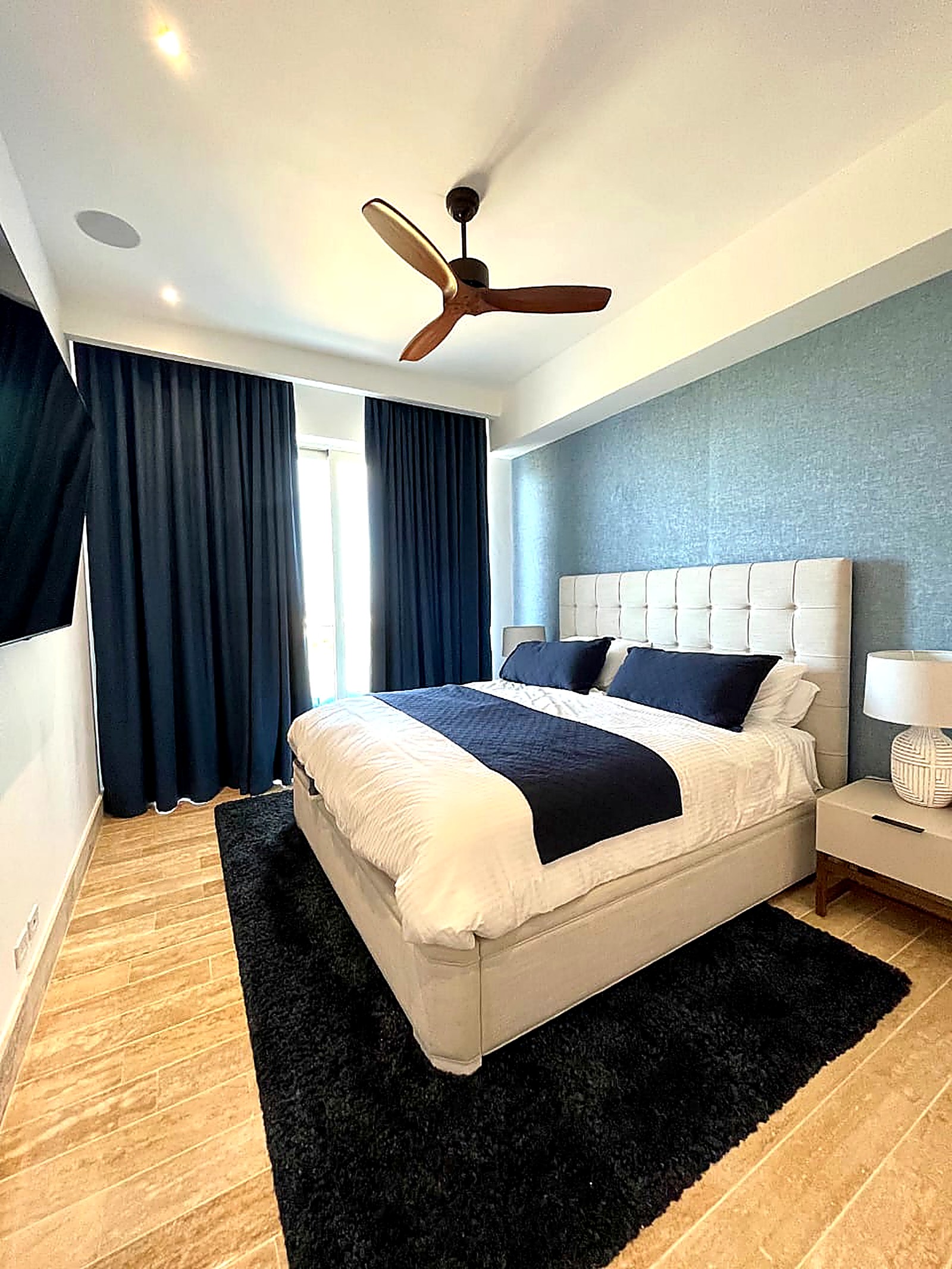
Fullness is the number nobody explains and the one that decides how the finished window looks. It is the panel's flat width compared to the width of the opening.
Twice the width of the opening. Clean, tailored folds and the most common choice. This is what most people picture when they picture custom drapery, and on a straightforward bedroom or dining room window it is the right call.
Noticeably deeper, more even folds, and the panel still reads crisp rather than heavy. If a window is on show — a front room, a tall opening, anywhere the drapery is part of the architecture — this is the one we point people toward.
The fullest option, and it looks it. Deep columns of fabric with real weight. It needs the ceiling height and the wall space to carry it, and it uses the most fabric, so it is a decision worth making deliberately rather than by default.
One related number that catches people out: the rod needs to be wider than the window — roughly a third again as wide — so that when the panels are open they stack on the wall beside the opening instead of sitting over the glass. Skip that and you lose daylight every time the curtains are open.
The header sets the character of the whole treatment, and it also decides how much wall the panel takes up when it is open.
The folds are turned to the back, so the front face reads as a flat, tailored header with a soft fold falling below each pleat. The cleanest and most modern of the pleated options, and it stacks smaller than a double because there is less fabric gathered at each pleat.
The same idea with more fabric folded into every pleat. Richer and fuller, deeper folds down the length of the panel, and a wider stack when the curtain is open. The one to pick when the room leans formal and there is wall space to take it.
Grommets give a casual, even wave and the smallest stack of all. A rod pocket is the simplest and most traditional. Ripple fold gives a continuous S-curve with no pleat at all — very current, and it stacks the widest. All three are fair choices; they just say different things about the room.
Length is a look, not a rule, and it is worth deciding on purpose rather than letting the fabricator decide for you.
Sill length stops at or just below the window sill. Practical over a kitchen counter, a radiator or a window seat, and the honest answer when floor length would be in the way.
Float stops about half an inch above the floor. The panel hangs dead straight, nothing drags, and it is the easiest to vacuum around. The cleanest-looking option in a modern room, and the least forgiving if your floor is not level.
Break is an extra inch or so of length so the panel just touches down and relaxes slightly at the hem. This is what we use most often. It looks intentional rather than short, and it hides the fact that almost no floor in almost no house is perfectly level.
Puddle is anything beyond that — a few extra inches for a soft pool, or six to sixteen for a true puddle. Romantic and traditional, and a commitment: it collects dust, it gets in the way of a vacuum, and pets and small children will find it.
Whichever you choose, the measurement is taken at your window, not from a plan. We check floor-to-ceiling at the left, the center and the right of every opening and cut to the shortest of the three, because a floor that runs downhill by three-quarters of an inch across a wide window will show in the hem if nobody checks.
Blackout curtains are the most-searched thing on this page and the most misunderstood. A blackout lining is an opaque layer sewn behind the face fabric. It is the only lining that genuinely stops light, and it is what turns a nice panel into a bedroom that still works at seven in the morning in June.
Here is the part most sites will not tell you. Light does not only come through the fabric. It comes around it. Around the sides, over the top, under the hem. A blackout-lined panel on a narrow rod, mounted just above the frame, will still leave a bright outline around the window. Getting a room properly dark is about the mounting as much as the fabric: a rod that runs well past the opening on both sides, mounted high, with panels wide enough to overlap in the middle when closed.
Drapery is often the better answer than a shade for exactly this reason. A shade sits inside or just over the opening and has a light gap at the edges by design. A curtain can be made to cover the whole wall. When a room has to be dark, we will tell you honestly whether drapery alone will do it, whether a blackout shade is the better tool, or whether the room wants both.
For everything short of blackout there is a middle ground: a standard lining for privacy and body, or an unlined sheer that filters daylight and glows when the sun hits it. Plenty of rooms end up with a sheer and a heavier panel on a double rod, so you can have either one on any given afternoon.
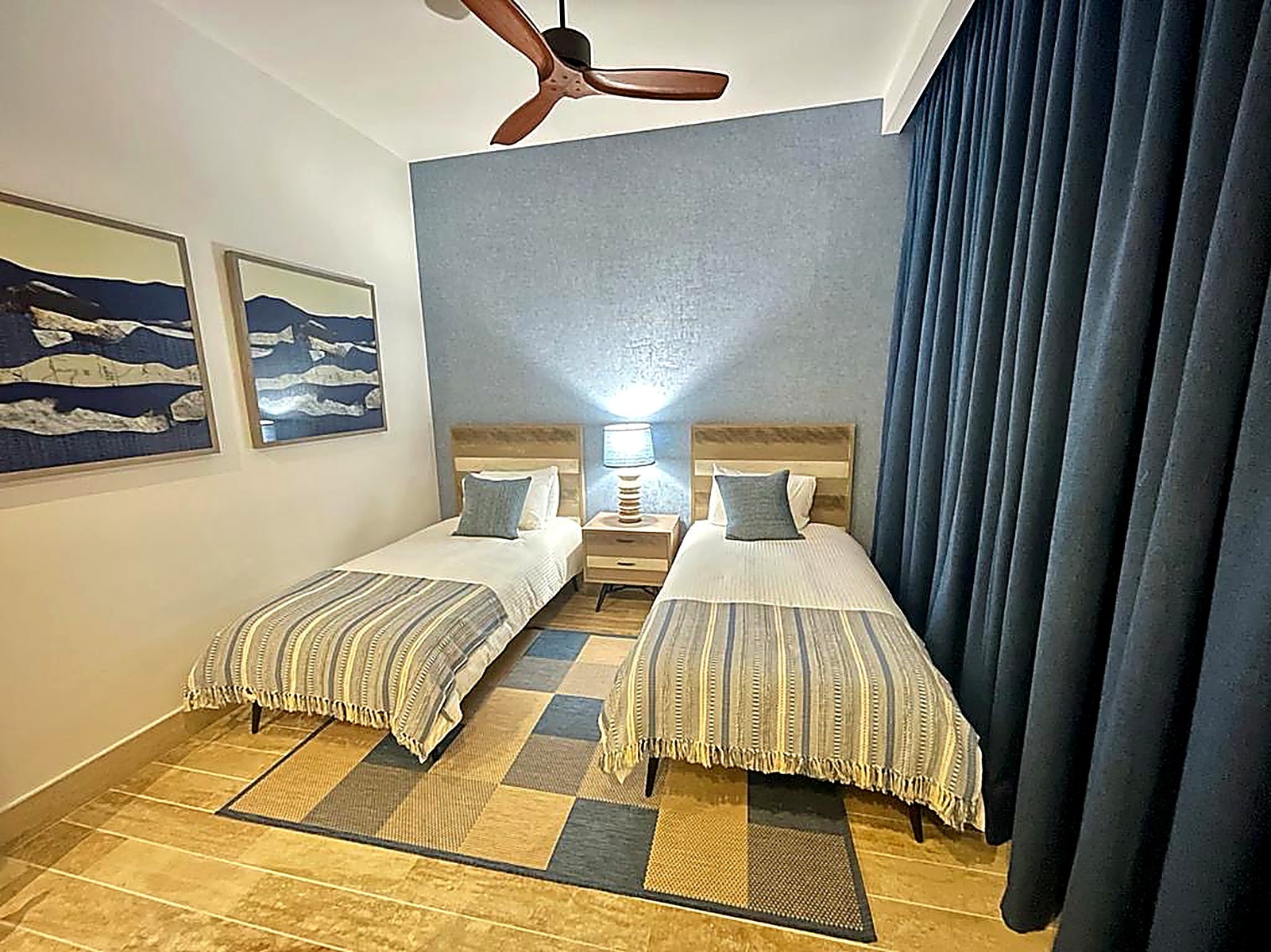
This is the most common arrangement in Treasure Valley homes and it is worth saying plainly, because it is not an upsell. A functional covering at the glass does the work — cellular for heat, a roller for glare, blackout for a dark room. Drapery panels at the sides do the finishing: softness, color, warmth, and a window that reads as part of the room instead of a hole in the wall.
You also do not have to do the whole house in drapery to get the benefit. Often it is two or three rooms — the primary bedroom, the dining room, the front window people see from the street — and hard window coverings everywhere else. We will tell you when a room genuinely needs both and when it does not.
Hardware matters more than people expect. Rod, brackets, rings and finials all show, and on a wide opening the bracket spacing is structural rather than decorative. We work that out with you at the measure so the rod can carry the weight of a lined panel across the span without sagging.
Yes — a blackout lining behind the face fabric. Just know that the mounting does as much of the work as the lining does. We will size the rod and the panels to close the light gap rather than handing you a dark panel on a short rod and calling it blackout.
Higher than you think. Roughly ten inches above the window, or just below the ceiling line in a room with normal ceilings. Mounting at the frame is the single most common thing that makes custom drapery look like it came off a shelf.
We work through the rod, brackets, rings and finials with you as part of the quote, and we size the rod to the opening so the panels stack off the glass. Some clients prefer to source a specific decorative rod themselves — that is fine, tell us early so we measure to it.
Yes, on a double rod — sheers on the inner rod, the heavier panel outside. You get filtered daylight and privacy during the day and the full panel at night. It is a common request and worth deciding before the rod is ordered, because a double rod is not something to retrofit.
Vacuum gently with a brush attachment and air them occasionally. Lined and pleated drapery is not something to put in a washing machine — the lining and face fabric shrink at different rates and the panel will never hang the same again. Professional cleaning when it is genuinely needed, not on a schedule.
They are cut and sewn to your numbers, so there is a lead time rather than a shelf. We give you a firm date at the in-home estimate once the fabric and lining are chosen, because the fabric is what drives it.
Between us, thirty years in the Treasure Valley — in and out of Valley homes. Angela grew up in her family’s shutter plant and opened her own here in Idaho in 2020. She can build a plantation shutter start to finish and paint it herself — which is exactly why she knows what to look for in the ones we install.
We’re not a franchise. The people who measure your windows are the same people who own the company.
If you’re ready, fill out the form below and either one of us will get right back to you. Call, text or email — whichever you prefer.

Tell us which windows you're covering and we'll bring samples, measure, and put a real number in front of you. Free, and no pressure. Prefer to talk? Call 208.755.8583.
Rather not fill in a form? Call or text us — whatever is easiest for you.
That number takes texts as well as calls. On a computer, point your phone camera at the code — a text to us opens already written, so all you do is hit send.
Or send your details below and we will come back to you.
We work directly with Treasure Valley builders and new-construction agents on whole projects — single homes to full developments — on schedule and to spec. Star, Kuna, Meridian, and Eagle are some of the fastest-growing new-construction markets in the Treasure Valley, and it is where a large share of our work happens. Whether it is shades for one spec home or window coverings across an entire subdivision, we build the schedule around your build schedule, not the other way around.
We coordinate around your build timeline, not the other way around.
Every unit gets the same construction-grade fit, home after home.
Direct communication with the owners, start to finish.